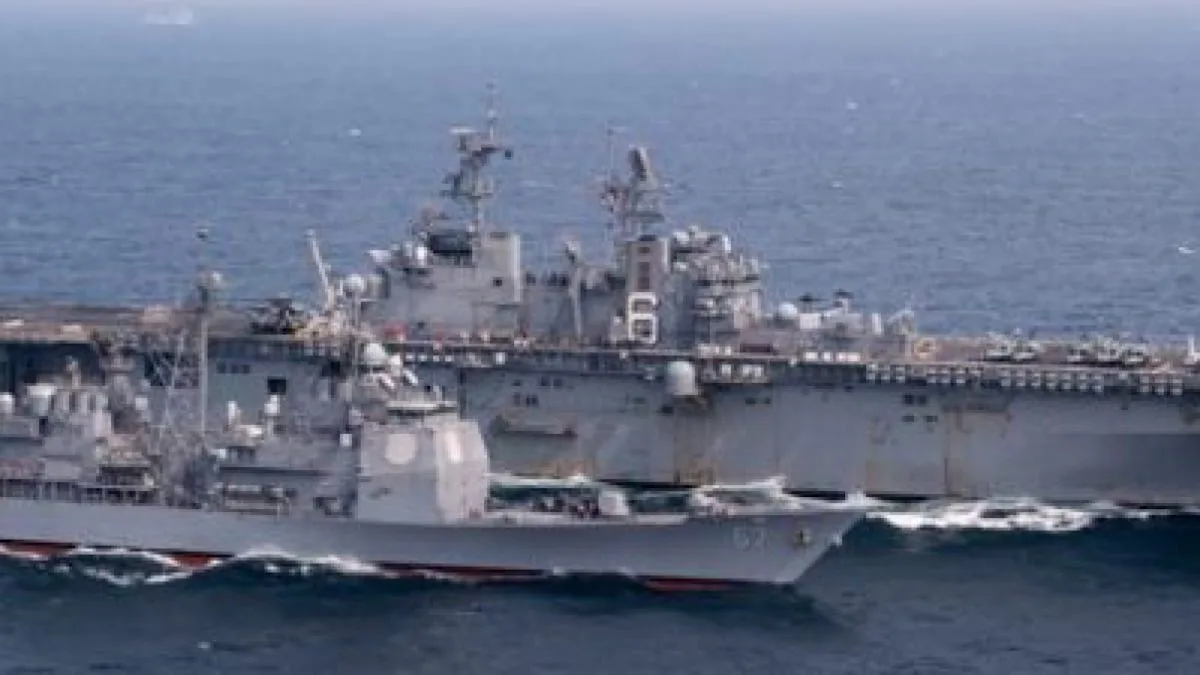
India’s maritime dilemma in the Strait of Hormuz has exposed a familiar but uncomfortable truth: in geopolitics, principle often yields to necessity. As tensions escalate following military actions involving the United States and Israel against Iran, New Delhi finds itself navigating not just contested waters, but a layered negotiation where energy security, legal enforcement, and diplomatic signalling intersect. At the heart of the issue lies India’s dependence on Gulf energy flows.
Nearly 90 per cent of its liquefied petroleum gas imports originate from this region, making uninterrupted passage through Hormuz less a strategic preference and more an economic imperative. With over 600 Indian seafarers and more than 20 Indian-flagged vessels caught in a volatile corridor, the stakes are not abstract ~ they are immediate and human. Yet India is not merely a passive actor seeking safe passage. The detention of three tankers ~ linked to Iranian oil networks and accused of identity manipulation and illicit ship-to-ship transfers ~ signals New Delhi’s willingness to enforce maritime norms, even when doing so complicates its diplomatic equations.
Advertisement
The involvement of entities allegedly connected to figures like Jugwinder Singh Brar, who has been flagged by the US Treasury for facilitating Iranian oil transport, further internationalises what might otherwise have remained a bilateral irritant. New Delhi must also weigh reputational risk: appearing susceptible to coercion could unsettle partners like Saudi Arabia and the UAE, whose cooperation remains vital to India’s long-term energy diversification strategy. Iran, for its part, is leveraging geography with calculated precision. The Strait of Hormuz has long been Tehran’s most effective pressure point, and in the current conflict environment, it is using selective permission ~ allowing certain vessels through while threatening others ~ as a tool of negotiation.
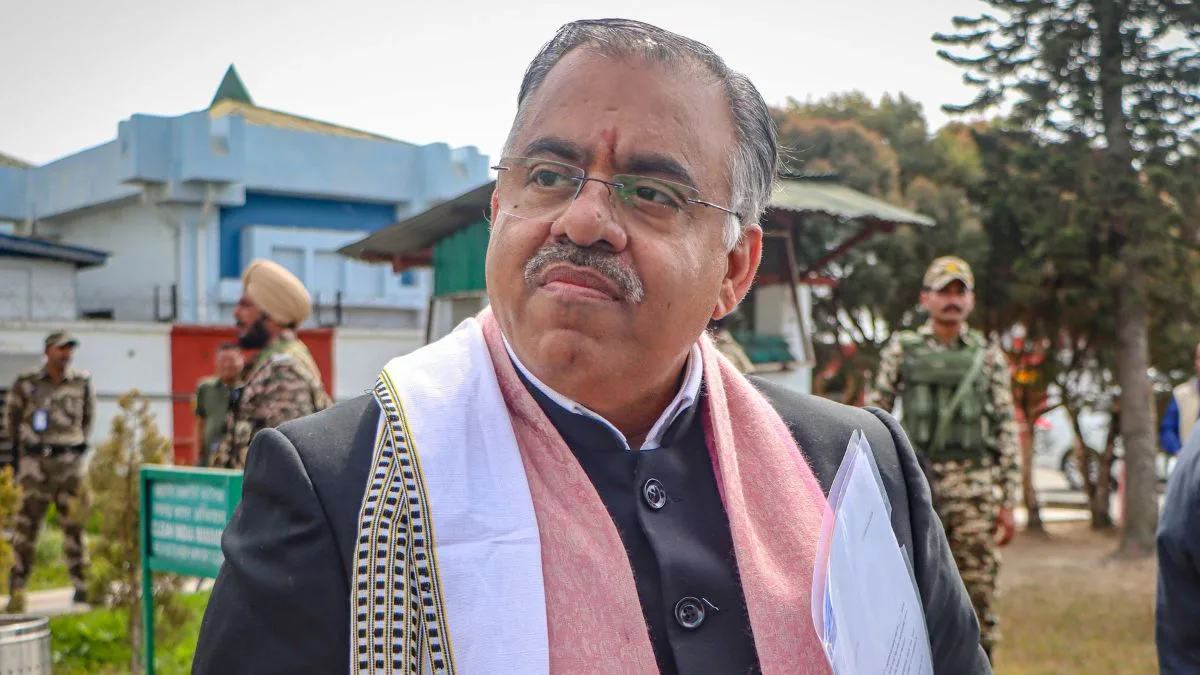
Its reported demands, including the release of detained tankers and access to critical medical supplies, reflect both economic strain and strategic opportunism. What emerges is not a formal agreement but a pattern of reciprocal adjustment. External Affairs Ministry spokesperson Randhir Jaiswal’s insistence that “nothing is being exchanged” sits uneasily alongside the observable sequencing of events: Indian vessels are allowed passage; Iranian-linked assets remain under Indian custody; discussions continue behind closed doors. This is diplomacy conducted in increments, not declarations.
For India, the challenge is to maintain credibility on maritime enforcement without jeopardising its energy lifelines. For Iran, the objective is to extract concessions without provoking broader escalation. Neither side can afford rigidity; both are operating within constraints imposed by larger geopolitical forces, including sanctions regimes and regional military dynamics.
This episode underscores a broader shift in international relations, where middle powers like India are increasingly compelled to engage in situational bargaining rather than adhere to fixed alignments. The Strait of Hormuz, once merely a chokepoint for oil, has become a theatre for calibrated negotiation ~ where passage is permission, and permission is power. In such a landscape, India’s response will likely remain deliberately ambiguous: firm enough to signal sovereignty, flexible enough to secure survival.